Fill in the form for a free no obligation quote on our Portable Buildings
How to Design an Eco Granny Flat: Essential Guide for 2026
Looking to build an eco granny flat on your property? Green construction projects now make up 47% of builders’ work. These green secondary dwellings have evolved significantly since their early days as basic backyard sheds. Modern eco-friendly granny flats blend environmental care with practical, comfortable living.
These compact spaces are perfect for extra accommodation, boosting your property’s value or generating rental income. Smart open-plan layouts and natural light make even a modest 40–60 square metre off-grid granny flat feel surprisingly roomy. With the right design choices—like solar panels and rainwater tanks—you can cut your utility bills and shrink your carbon footprint at the same time.
In this article, we’ll explain what it takes to create an eco-friendly granny flat in 2026—from sustainable design to smart energy features—so you can build a space that’s efficient, future-proof, and adds long-term value to your property.
The Rise of Eco Granny Flats
Eco granny flats represent a major shift in how Australians are approaching secondary dwellings. In recent years, there’s been a surge in demand for sustainable, energy-efficient alternatives among environmentally conscious homeowners.
Why Sustainable Living Is Gaining Momentum
Climate change, rising energy costs, and growing awareness have pushed more Aussies towards greener building choices. Sustainable living is no longer a trend—it’s a practical and necessary response. According to industry research, well-designed eco granny flats can reduce energy use and carbon emissions by up to 90% compared to traditional structures.
It’s not just about the environment—going green can also be easier on your wallet. Incentives like the Small-scale Renewable Energy Scheme (SRES) make it more cost-effective to invest in solar power and other green upgrades.
From Backyard Shed to Eco Smart Home
Granny flats have come a long way. Once simple structures tucked away in the backyard, they’re now sophisticated spaces equipped with high-performance features such as:
- Smart home tech for lighting, heating, and security
- Passive solar design that regulates temperature naturally
- Energy-efficient appliances that cut down on power usage
- Water-saving taps, toilets, and fixtures
Modern off-grid granny flats are purpose-built for the Australian climate, using local conditions—sun angles, ventilation, seasonal shifts—to reduce reliance on artificial heating and cooling.
Benefits of Eco-Friendly Granny Flats
Going green comes with real-world perks for homeowners.
- Lower utility bills – Many report savings of 40% or more after installing solar and energy-efficient systems.
- Higher property value – Sustainable homes tend to attract more buyers and sell for higher prices.
- Healthier living – Better ventilation and insulation mean cleaner air, more stable indoor temperatures, and less noise.
- Energy independence – Pairing solar panels with battery storage to the main power source allows you to stay powered even during blackouts.
Add in rainwater harvesting, and you’ve got a self-sufficient space that’s resilient and ready for whatever comes your way.
Recommended Read: How Much Does It Cost to Build a Granny Flat
Smart Design Tips for Small Eco Spaces
Even with a small footprint, you can design a granny flat that’s clever, comfortable, and packed with potential.
Go Open Plan for Flow and Light
Open-plan layouts are the backbone of great small-space design. Fewer walls mean more natural flow, better social connection, and more light. A dining table can divide the kitchen and living area, while an L-shaped couch can subtly define zones without closing them off.
Letting light travel through your flat cuts down on daytime lighting needs—and makes the space feel larger.
Choose Multi-Functional Furniture
In small spaces, everything should serve more than one purpose. Consider:
- Benches that double as dining tables
- Ottomans with hidden storage
- Murphy beds that fold away
- Coffee tables with built-in compartments
Built-in cabinetry helps reduce visual clutter and maximises usable space.
Use Your Vertical Space
Think upwards. Floor-to-ceiling shelves, tall cupboards, and wall-mounted storage help declutter your floors while making the room feel bigger.
Don’t forget small zones like entryways and laundry nooks—wall hooks and slimline shelving can go a long way.
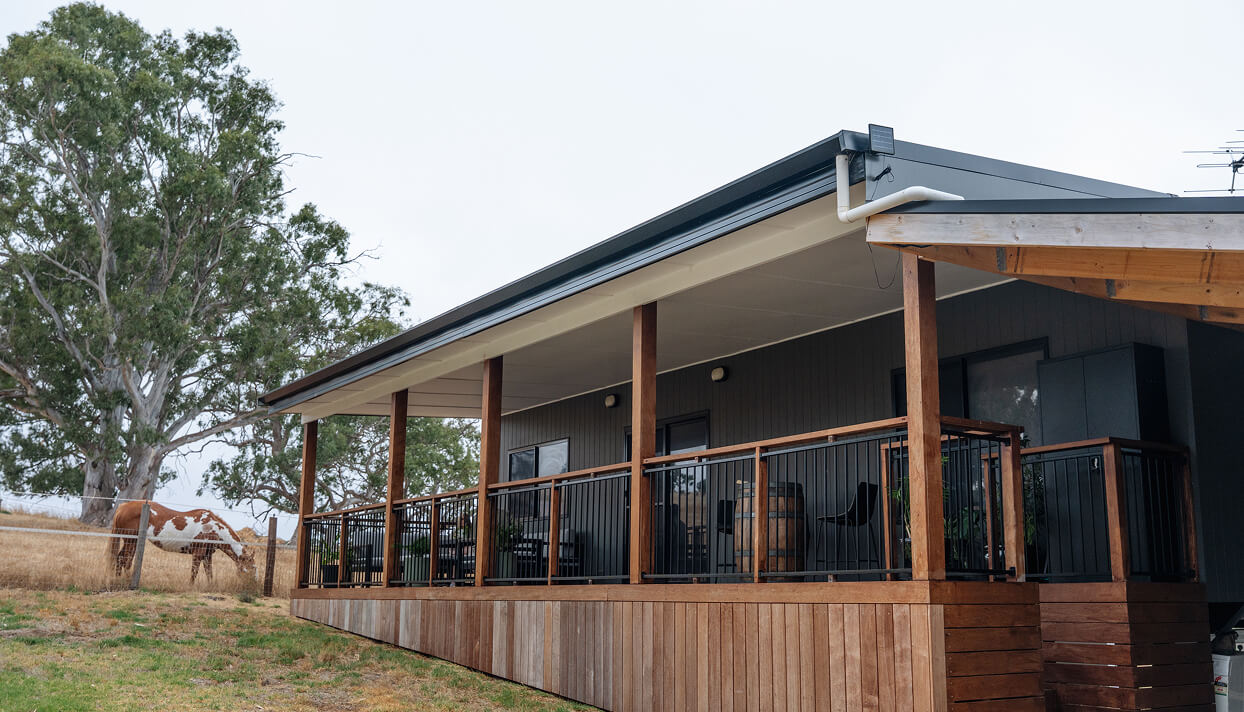
Eco Materials and Energy-Saving Features
Choosing the right materials and systems at the start can drastically reduce your eco granny flat’s environmental footprint—and your future running costs.
Sustainable Building Materials
Opt for materials with low embodied energy and minimal waste:
- Recycled steel – Two-thirds of steel used in Australia comes from recycled sources.
- Minimal Concrete – Concrete makes up 10% of the world’s emissions; most applications do not require concrete
- Timber – Beautiful and better for the planet.
- Bamboo plywood – Rapidly renewable and free from harmful VOCs.
These alternatives are durable and planet-friendly.
Insulation and Passive Design
Insulation is critical. Consider:
- Earthwool – Excellent R-values.
- Thermal Break – Prevents heat transfer.
- Air Tightness – Blower door testing to ensure air transfer can be controlled
Pair this with good passive design. In Australia, north-facing windows (within 30° of true north) capture winter sun, while eaves or shading prevent overheating in summer. Thermal mass materials like concrete can store and release heat as needed.
Efficient Appliances and Lighting
Look for energy-rated appliances with eco modes. LED lights are a must—they use up to 80% less energy and last longer.
Water-Saving Fixtures
Install low-flow showerheads, dual-flush toilets, and aerated taps. Some new showerheads cut water use by 60%—without compromising pressure.
Energy Consumption
The energy required to power these types of buildings is much less energy-intensive per occupant than a standard house. The compact and energy-efficient designs are very economical.
Creative Uses and Long-Term Value
Your eco granny flat is more than a backyard structure—it’s a flexible asset with long-term benefits.
Home Office or Creative Studio
Nearly 40% of Australians work from home in some capacity. A separate granny flat makes a perfect dedicated workspace—with proper boundaries, privacy, and even its own kitchen and bathroom.
Guest Accommodation or Rental Income
Granny flats in Australia can boost rental income by around 27%. Whether you’re catering to students, professionals, retirees, or travellers, a well-designed eco flat is an attractive option for tenants.
Ageing in Place or Multi-Generational Living
Future-proof your design with wider doorways, grab rails, and accessible layouts. Smart home technology also makes life easier for older residents.
Families living together across generations often find a granny flat offers the perfect blend of independence and connection.
Property Value Uplift
According to CoreLogic, a well-designed granny flat can increase property value by around 30%. Add green features, and you’re making your home even more attractive to eco-conscious buyers looking for flexibility, resilience, and long-term savings.
How Modify Can Help
At Modify, we understand that designing a sustainable granny flat isn’t just about going green—it’s about creating a smart, future-ready space that truly works for your lifestyle.
Whether you’re looking for an off-grid tiny home, a custom-designed studio, or a rental-ready eco flat, our team specialises in high-quality, Australian-made buildings that are built to last. From passive design principles to solar integration and water-saving systems, we offer a range of options to suit your needs and budget.
Let’s bring your eco vision to life—get in touch to discuss your project and discover how an eco granny flat can add lasting value to your property.
SEE HOW IT’ll WORK FOR YOU
Real success stories from clients who’ve trusted us with their projects